
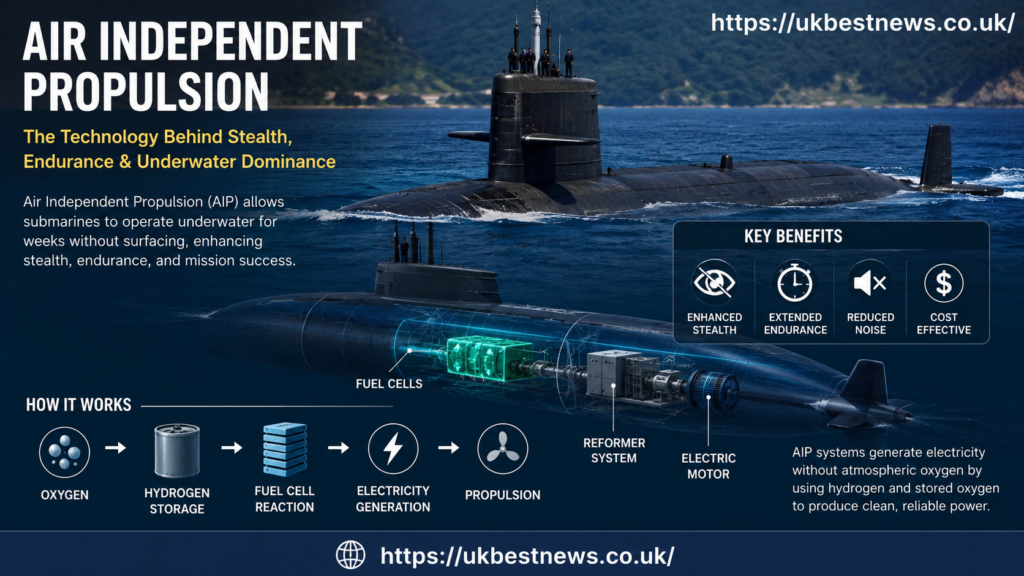

Air independent propulsion is one of the most transformative innovations in modern naval engineering, redefining how submarines operate beneath the ocean’s surface. Traditionally, diesel-electric submarines relied heavily on atmospheric oxygen to run their engines, forcing them to surface frequently. This limitation exposed them to detection, reducing their stealth capabilities. With the introduction of air independent propulsion, submarines can now remain submerged for extended periods, significantly enhancing their operational efficiency and tactical advantage.
In today’s evolving maritime security landscape, stealth, endurance, and energy efficiency are critical. addresses all three by allowing non-nuclear submarines to operate with near-silent movement and extended underwater endurance. This technology has become a cornerstone for many navies around the world, especially those seeking cost-effective alternatives to nuclear-powered submarines. Its development marks a turning point in underwater warfare and exploration.
The Evolution of Submarine Propulsion Systems
The history of submarine propulsion reflects humanity’s continuous quest for underwater dominance and exploration. Early submarines were powered by human effort or simple mechanical systems, which limited their range and effectiveness. With the industrial revolution came steam engines, followed by diesel-electric systems that allowed submarines to operate more efficiently but still required periodic surfacing.
The introduction of air independent propulsion represented a major leap forward. Unlike traditional systems, it does not depend on atmospheric oxygen, enabling submarines to stay submerged for weeks rather than days. This advancement bridges the gap between conventional and nuclear submarines, offering a balance between performance and affordability. As a result, many countries have adopted this technology to modernize their naval fleets.
How Air Independent Propulsion Works
Air independent propulsion operates by generating energy without relying on external air sources. Various technologies achieve this, including fuel cells, Stirling engines, and closed-cycle diesel engines. Each system has its unique mechanism, but all share the common goal of enabling underwater endurance without surfacing.
Fuel cell systems, for example, combine hydrogen and oxygen to produce electricity, emitting only water as a byproduct. Stirling engines, on the other hand, use external heat sources to drive pistons and generate power. These systems are designed to operate quietly, reducing the acoustic signature of submarines. This silent operation is crucial for avoiding detection in hostile environments, making air independent propulsion a game-changer in naval warfare.
Types of Air Independent Propulsion Technologies
There are several types of air independent propulsion technologies, each offering distinct advantages. Fuel cell-based systems are widely regarded as the most efficient and environmentally friendly option. They provide consistent power output and minimal noise, making them ideal for stealth operations.
Stirling engine systems are another popular choice, known for their reliability and simplicity. They have been successfully implemented in various submarine classes, providing a proven solution for extended underwater missions. Closed-cycle diesel engines and MESMA systems also contribute to the diversity of air independent propulsion technologies, ensuring that navies can select the most suitable option based on their operational requirements.
Advantages of Air Independent Propulsion
One of the primary advantages of air independent propulsion is enhanced stealth. By eliminating the need to surface frequently, submarines can avoid detection by radar and other surveillance systems. This capability is particularly valuable in military operations, where secrecy and surprise are critical.
Another significant benefit is extended endurance. Submarines equipped with air independent propulsion can remain submerged for weeks, allowing them to cover greater distances and perform longer missions. This endurance also reduces the risk to crew members by minimizing exposure to hostile environments. Additionally, the technology offers improved fuel efficiency and lower operational costs compared to nuclear-powered alternatives.
Limitations and Challenges
Despite its advantages, air independent propulsion is not without limitations. One of the main challenges is the complexity of the technology. Systems such as fuel cells require specialized materials and infrastructure, which can increase costs and maintenance requirements.
Another limitation is power output. While air independent propulsion significantly enhances endurance, it does not match the high-speed capabilities of nuclear propulsion. This makes it more suitable for stealth and surveillance missions rather than rapid response operations. Furthermore, storage of fuels like hydrogen and oxygen presents safety and logistical challenges that must be carefully managed.
Global Adoption and Naval Applications
Many countries have embraced air independent propulsion to strengthen their naval capabilities. Nations in Europe and Asia, in particular, have invested heavily in this technology to modernize their submarine fleets. It provides a strategic advantage by enabling smaller navies to compete with more advanced forces.
The adoption of air independent propulsion has also influenced naval strategies. Submarines equipped with this technology are often used for intelligence gathering, reconnaissance, and covert operations. Their ability to remain undetected for extended periods makes them invaluable assets in both defensive and offensive scenarios.
Environmental and Economic Impact
Air independent propulsion offers notable environmental benefits compared to traditional diesel engines. Fuel cell systems, for instance, produce minimal emissions, contributing to cleaner marine operations. This aligns with global efforts to reduce the environmental impact of military and industrial activities.
From an economic perspective, air independent propulsion provides a cost-effective alternative to nuclear submarines. While the initial investment may be significant, the long-term operational savings and reduced maintenance costs make it an attractive option. This balance between performance and affordability has driven widespread adoption across various naval forces.
Future Innovations in Air Independent Propulsion
The future of air independent propulsion is filled with potential advancements. Researchers are exploring new materials and technologies to improve efficiency, reduce costs, and enhance performance. Developments in hydrogen storage and fuel cell technology are expected to play a key role in shaping the next generation of submarines.
Emerging trends also include the integration of renewable energy sources and hybrid systems. These innovations aim to further reduce environmental impact while maintaining high levels of performance. As technology continues to evolve, air independent propulsion will likely become even more sophisticated, solidifying its position as a cornerstone of modern naval engineering.
Strategic Importance in Modern Warfare
In modern warfare, the ability to remain undetected is a decisive advantage. Air independent propulsion enables submarines to operate silently and independently, making them ideal for covert missions. This capability enhances strategic flexibility and allows navies to respond effectively to emerging threats.
The technology also plays a crucial role in deterrence. The presence of stealthy submarines equipped with air independent propulsion can influence geopolitical dynamics by providing a credible defense capability. As global tensions continue to evolve, the importance of this technology in maintaining security and stability cannot be overstated.
Conclusion
Air independent propulsion has revolutionized submarine technology by addressing the limitations of traditional propulsion systems. Its ability to enhance stealth, endurance, and efficiency has made it an essential component of modern naval operations. By bridging the gap between conventional and nuclear submarines, it offers a versatile and cost-effective solution for a wide range of missions.
As the technology continues to advance, its impact will only grow stronger. From military applications to environmental benefits, air independent propulsion represents a significant step forward in underwater engineering. Its role in shaping the future of naval warfare and exploration ensures that it will remain a critical area of innovation for years to come.
FAQs
What is air independent propulsion
Air independent propulsion is a technology that allows submarines to operate underwater without relying on atmospheric oxygen, enabling longer submersion times.
Why is air independent propulsion important
It enhances stealth and endurance, allowing submarines to remain undetected and perform extended missions.
What are the main types of air independent propulsion
The main types include fuel cells, Stirling engines, and closed-cycle diesel engines, each offering unique advantages.
How long can submarines stay underwater with air independent propulsion
Submarines can remain submerged for several weeks, depending on the system and operational conditions.
Is air independent propulsion better than nuclear propulsion
It is more cost-effective and quieter but does not provide the same power and speed as nuclear propulsion.
Which countries use air independent propulsion
Many countries, including Germany, Sweden, and Japan, have adopted this technology for their submarine fleets.
What is the future of air independent propulsion
Future developments focus on improving efficiency, reducing costs, and integrating renewable energy sources.