

Introduction
A lush, green lawn is one of the first things people notice about a home. Whether you want to improve curb appeal, create a safer place for kids and pets to play, or simply enjoy a beautiful outdoor space, keeping grass healthy requires more than regular mowing and watering. One of the most popular lawn care products in the United States is Scotts Weed and Feed, a solution designed to tackle two of the biggest lawn problems at the same time: unwanted weeds and nutrient-deficient grass.
Many homeowners struggle with weeds invading their yards every spring and summer. Dandelions, clover, chickweed, dollarweed, and dozens of other broadleaf weeds compete with healthy grass for water, sunlight, and nutrients. At the same time, lawns often lack the essential nutrients needed to stay thick, green, and resilient. Scotts Weed and Feed addresses both concerns in a single application, making lawn care easier and more efficient.
This complete guide explains everything you need to know about Scotts Weed and Feed, including how it works, the different varieties available, the best application methods, common mistakes to avoid, seasonal lawn care strategies, and practical tips for achieving professional-looking results. Whether you’re maintaining Kentucky Bluegrass in the northern United States or Bermuda grass in warmer southern climates, this guide will help you understand how to maximize the benefits of Scotts Weed and Feed while protecting your lawn investment.
What Is Scotts Weed and Feed and How Does It Work?
Scotts Weed and Feed is a combination lawn care product that contains two primary components. The first is a lawn fertilizer that supplies essential nutrients, primarily nitrogen, to encourage thicker, greener grass growth. The second is a selective herbicide formulated to target common broadleaf weeds while leaving compatible grass species largely unaffected. This dual-purpose approach saves homeowners time because fertilizing and weed control occur simultaneously instead of requiring separate treatments.
Unlike non-selective herbicides that kill nearly every plant they touch, Scotts Weed and Feed specifically targets broadleaf weeds. The active ingredients are absorbed through weed leaves and move throughout the plant, eventually killing it from the inside. Healthy turfgrass varieties listed on the product label are generally able to tolerate these herbicides when the product is used correctly, allowing desirable grass to flourish while weeds gradually disappear over several weeks.
The fertilizer component encourages thicker turf growth, which naturally helps suppress future weed growth. Dense grass shades the soil, reducing sunlight available for weed seeds to germinate. Strong root systems also compete more effectively for moisture and nutrients, creating an environment where weeds struggle to establish themselves. This combination of immediate weed control and long-term lawn improvement is one reason Scotts Weed and Feed has become a trusted product for homeowners across the United States.
Another important feature is convenience. Rather than purchasing separate fertilizers and herbicides and planning multiple applications, homeowners can streamline lawn maintenance. However, success depends on applying the product at the correct time, using the proper spreader settings, and following all label directions carefully.
Why Scotts Weed and Feed Is One of America’s Most Popular Lawn Care Products
Scotts has built a reputation for producing reliable lawn care products that are widely available at home improvement stores, garden centers, and online retailers throughout the United States. Many homeowners choose Scotts Weed and Feed because it combines simplicity with effective results, making lawn care less intimidating for beginners while still delivering dependable performance for experienced gardeners.
One major advantage is the product’s versatility. Different formulations are available for various grass types and regional climates, allowing homeowners to choose options specifically designed for northern or southern lawns. This helps improve effectiveness while reducing the likelihood of damaging certain grass varieties that may be sensitive to particular herbicides.
Another reason for its popularity is the noticeable improvement in lawn appearance. Within a few weeks after proper application, weeds begin to curl, discolor, and die. Meanwhile, the fertilizer encourages vibrant green growth that fills in bare patches and creates a thicker lawn. Many homeowners appreciate seeing both weed reduction and improved turf density from a single treatment rather than managing multiple products throughout the season.
Scotts also provides detailed instructions, spreader settings, seasonal lawn care schedules, and educational resources that simplify the application process. This guidance helps homeowners avoid common mistakes and achieve more consistent results, even if they have limited lawn care experience. The brand’s long-standing presence in the lawn care industry further contributes to consumer confidence and widespread use.
Different Types of Scotts Weed and Feed Products
Not every Scotts Weed and Feed product is identical. The company offers several formulations designed to meet different lawn conditions, climates, and grass varieties. Understanding these differences helps homeowners choose the most appropriate product for their specific needs instead of assuming one formula works equally well everywhere.
Many northern homeowners use Scotts Turf Builder Weed & Feed because it is formulated for cool-season grasses such as Kentucky Bluegrass, Perennial Ryegrass, and Tall Fescue. These lawns typically experience their strongest growth during spring and fall, making those seasons ideal for fertilizer applications. The herbicides included are selected to control common northern broadleaf weeds while supporting healthy turf development.
For southern lawns, Scotts offers products formulated for warm-season grasses like Bermuda grass, St. Augustine grass, Centipede grass, Zoysia grass, and Bahiagrass. Since warm-season grasses have different growth cycles and herbicide tolerances, these specialized formulas are designed to maximize weed control while minimizing the risk of turf injury. Using the wrong formulation on certain southern grass types may reduce effectiveness or even damage the lawn, making product selection especially important.
Some Scotts Weed and Feed products also include enhanced nutrient blends designed to strengthen root systems, improve drought tolerance, or promote faster greening. Premium formulations may contain slow-release nitrogen, allowing nutrients to feed the lawn gradually over several weeks instead of delivering an immediate but short-lived burst of growth. This steady feeding helps maintain a healthier lawn with fewer nutrient fluctuations.
There are also products specifically developed to control tougher weed species found in certain regions of the country. Depending on local weed populations, homeowners may benefit from selecting formulations that target clover, chickweed, dollarweed, oxalis, henbit, plantain, or other persistent broadleaf weeds common in their area. Reading the product label before purchasing ensures the selected formula matches both the lawn type and the weeds present.
Understanding the Ingredients Inside Scotts Weed and Feed
To use Scotts Weed and Feed effectively, it helps to understand what makes the product work. While formulations vary depending on the specific product, most versions contain carefully balanced fertilizer nutrients alongside selective herbicides that attack unwanted weeds without harming compatible turfgrass.
Nitrogen is usually the primary nutrient because it promotes vigorous leaf growth and enhances the rich green color homeowners desire. Healthy nitrogen levels increase photosynthesis, allowing grass to produce more energy for root development and recovery from environmental stress. Many Scotts products also contain phosphorus or potassium depending on the intended purpose and regional fertilizer regulations.
The herbicide portion often includes active ingredients that disrupt normal growth processes within broadleaf weeds. These compounds cause uncontrolled cell growth, eventually leading to plant death while leaving most turfgrass species unaffected. Because the herbicide is absorbed primarily through weed foliage rather than roots, application timing becomes especially important. Slightly moist weed leaves improve herbicide adhesion and increase overall effectiveness.
In addition to active ingredients, Scotts Weed and Feed contains carrier materials that ensure even distribution across the lawn when applied with a broadcast or rotary spreader. Uniform coverage is essential because uneven applications can leave untreated weed patches while overapplying fertilizer in other areas. Following the recommended spreader settings significantly improves consistency and reduces waste.
Modern formulations are also designed with environmental considerations in mind. Many products use slow-release fertilizer technology that feeds grass over an extended period, helping reduce nutrient runoff during heavy rainfall while providing longer-lasting lawn benefits. Responsible application practices, including avoiding sidewalks, driveways, and storm drains, further minimize environmental impact while protecting nearby waterways.
When Is the Best Time to Apply Scotts Weed and Feed?
Timing is one of the most important factors influencing the success of Scotts Weed and Feed. Even the highest-quality product cannot perform at its best if applied during unfavorable weather conditions or at the wrong stage of weed growth. Understanding seasonal timing allows homeowners to maximize both weed control and lawn nutrition.
For most cool-season lawns, spring is considered the ideal application period because broadleaf weeds are actively growing and grass is emerging from winter dormancy. Applying Scotts Weed and Feed during this active growth stage allows weeds to absorb the herbicide efficiently while fertilizer supports vigorous turf development. Many lawn care professionals also recommend a second application later in the growing season if permitted by the product label and local regulations.
Warm-season grasses generally benefit from applications made after the lawn has fully greened up in late spring. Applying too early while warm-season grass remains dormant may increase the risk of injury or reduce fertilizer effectiveness. Waiting until active growth begins ensures the grass can efficiently utilize nutrients while competing against emerging weeds.
Weather conditions also influence results. Mild temperatures, light soil moisture, and limited rainfall immediately after application typically provide optimal performance. Heavy rain shortly after spreading the product can wash fertilizer away before nutrients are absorbed and reduce herbicide effectiveness by removing material from weed leaves. Similarly, applying during periods of extreme heat or drought may stress the lawn and decrease overall treatment success.
How to Apply Scotts Weed and Feed Correctly for the Best Results
Applying Scotts Weed and Feed properly is just as important as selecting the right product. Even a premium lawn care product cannot deliver the desired results if it is spread unevenly or at the wrong time. Following the correct application process increases weed control, improves fertilizer efficiency, and helps create a thicker, healthier lawn that naturally resists future weed growth.
Before beginning, identify your grass type and confirm that the Scotts Weed and Feed product you purchased is compatible with your lawn. Cool-season grasses such as Kentucky bluegrass, perennial ryegrass, and tall fescue require different formulations than warm-season grasses like Bermuda, Zoysia, Centipede, or St. Augustine. Using the wrong formula can reduce weed control or even injure desirable grass, making this first step essential.
Preparation also plays a significant role. Mow the lawn one or two days before application rather than immediately afterward. This allows weeds to have enough leaf surface for the herbicide to stick effectively while preventing freshly cut grass from interfering with coverage. If the product instructions recommend applying to damp grass, lightly water the lawn early in the morning or apply while dew remains on the leaves. Moist foliage helps herbicide granules adhere to weeds rather than falling directly onto the soil.
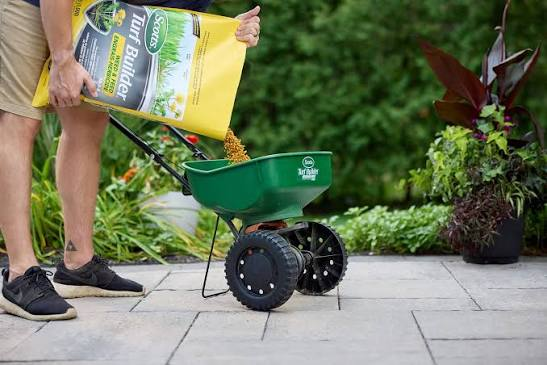
A quality broadcast spreader or rotary spreader provides the most consistent distribution across the lawn. Scotts includes recommended spreader settings on each product package, helping homeowners avoid overapplication or missed sections. Walking at a steady pace while slightly overlapping each pass creates even coverage across the yard. Random walking patterns or inconsistent speed often result in stripes, uneven growth, or untreated weed patches that become noticeable within weeks.
After spreading Scotts Weed and Feed, follow the watering instructions listed on the product label. Some formulations require watering after a waiting period to activate the fertilizer, while others rely on herbicide remaining on weed leaves before irrigation begins. Reading the specific directions for your product is essential because application instructions can differ between formulations. Proper timing ensures maximum nutrient absorption while giving herbicides enough opportunity to enter targeted weeds.
Patience is equally important after treatment. Many homeowners expect weeds to disappear within a few days, but visible results usually develop gradually. Weeds often begin curling, twisting, yellowing, or browning over one to three weeks depending on weather conditions and weed species. Meanwhile, healthy grass continues receiving nutrients that support stronger roots and greener growth throughout the feeding period.
Common Mistakes Homeowners Make When Using Scotts Weed and Feed
Although Scotts Weed and Feed is designed to simplify lawn care, several common mistakes can reduce its effectiveness. Understanding these errors helps homeowners achieve better results while protecting both their lawn and the surrounding environment.
One of the most frequent mistakes is applying the product too early in the season. Weed control products perform best when weeds are actively growing because the herbicide must be absorbed through living leaves. Applying before weeds emerge or while grass remains dormant often leads to disappointing results. Waiting until both grass and weeds are actively growing dramatically improves performance.
Another common error involves mowing immediately before or after application. Freshly cut weeds have less leaf surface available to absorb herbicide, reducing control effectiveness. Likewise, mowing immediately after treatment may remove herbicide before it fully enters the weed. Allowing several days between mowing and application gives the product sufficient time to work.
Overapplying fertilizer is another issue many homeowners unknowingly create. Some believe adding extra product will produce faster greening or stronger weed control, but excessive fertilizer can burn grass, stimulate unnecessary top growth, and increase nutrient runoff after rainfall. Carefully following label rates provides the safest and most effective application while avoiding unnecessary expense.
Ignoring weather forecasts also contributes to poor results. Heavy rain shortly after application may wash fertilizer away or remove herbicide from weed leaves before absorption occurs. Likewise, applying during extreme heat, drought, or unusually windy conditions can reduce effectiveness or increase the likelihood of uneven distribution. Choosing calm weather with moderate temperatures typically produces better long-term outcomes.
Many homeowners also forget to calibrate or inspect their spreader before application. Worn wheels, clogged openings, or incorrect settings may distribute too much product in some areas while leaving other sections untreated. Periodically checking spreader performance and cleaning equipment after each use helps maintain accurate applications year after year.
Finally, unrealistic expectations often lead to disappointment. Scotts Weed and Feed is not an instant solution. Weed death occurs gradually, and severely neglected lawns may require multiple seasons of proper care before reaching their full potential. Consistent mowing, watering, overseeding when appropriate, and seasonal fertilization all contribute to long-term success beyond a single application.
Scotts Weed and Feed vs. Separate Fertilizer and Weed Control Products
Many homeowners wonder whether combination products like Scotts Weed and Feed outperform purchasing fertilizer and weed control products separately. The answer depends largely on lawn conditions, maintenance goals, and the level of customization desired.
One of the biggest advantages of Scotts Weed and Feed is convenience. Applying a single product saves time, reduces equipment cleaning, and simplifies lawn care scheduling. Busy homeowners appreciate being able to fertilize and control broadleaf weeds during one application rather than managing multiple treatments throughout the growing season.
Combination products also reduce the likelihood of forgetting one part of the lawn care process. Some homeowners consistently fertilize but neglect weed control, while others eliminate weeds without providing nutrients that encourage thicker turf. Scotts Weed and Feed addresses both needs simultaneously, helping lawns recover more quickly after weeds disappear.
However, separate products provide greater flexibility for advanced lawn care enthusiasts. A homeowner dealing with severe weed infestations may prefer applying a dedicated herbicide while using a fertilizer tailored to seasonal nutrient requirements. Likewise, lawns with minimal weed pressure may only need fertilizer, making combination products unnecessary during certain parts of the year.
Cost can also influence the decision. Purchasing separate products occasionally increases overall expense, particularly when specialty herbicides are required for difficult weed species. Scotts Weed and Feed often provides excellent value because it combines two essential lawn treatments into a single package while reducing labor and application time.
Environmental considerations may also affect product choice. Separate applications allow homeowners to apply herbicide only where weeds exist rather than treating the entire lawn. Spot treatments can reduce overall herbicide use, especially on healthy lawns with only scattered weed populations. Nevertheless, for many average residential lawns experiencing widespread broadleaf weeds, Scotts Weed and Feed remains an efficient and practical solution.
Ultimately, both approaches can produce excellent results when used correctly. Scotts Weed and Feed is particularly attractive for homeowners seeking convenience, reliable performance, and a simplified lawn care routine without sacrificing healthy turf development.
Seasonal Lawn Care Schedule Using Scotts Weed and Feed
Maintaining an attractive lawn requires more than one application each year. Scotts Weed and Feed performs best when incorporated into a complete seasonal lawn care program that addresses changing weather conditions and grass growth cycles throughout the year.
Spring represents the beginning of active lawn growth across much of the United States. Soil temperatures rise, grass resumes growth, and broadleaf weeds begin emerging from winter dormancy. This period offers an excellent opportunity to apply Scotts Weed and Feed because both fertilizer uptake and herbicide effectiveness are typically high. Spring is also an ideal time to inspect irrigation systems, sharpen mower blades, and repair winter damage before summer stress arrives.
As summer approaches, healthy mowing practices become increasingly important. Grass should never be cut too short because taller blades shade the soil, reduce moisture loss, and naturally suppress weed germination. Watering deeply but less frequently encourages stronger root development compared to shallow daily irrigation. During periods of extreme heat, homeowners should avoid unnecessary lawn stress by postponing additional fertilizer applications unless specifically recommended for their grass type.
Autumn provides another critical period for cool-season lawns. Grass focuses energy on root development rather than leaf growth, making fall fertilization highly beneficial. Overseeding thin areas, improving soil health, and addressing any remaining weeds prepare the lawn for winter while establishing stronger turf for the following spring. Warm-season grasses follow different seasonal patterns, often slowing growth as temperatures decline before entering dormancy.
Winter is generally a maintenance season rather than an active treatment period. Homeowners can service spreaders, organize lawn care equipment, evaluate soil test results, and plan next year’s maintenance schedule. Reviewing previous successes and challenges also helps improve future application timing and product selection.
Following a complete annual lawn care schedule rather than relying solely on individual treatments allows Scotts Weed and Feed to become part of a broader strategy that promotes dense, healthy turf capable of resisting weeds naturally. Consistency throughout the year almost always produces better long-term results than occasional treatments performed only when weeds become noticeable.
Safety Tips for Families, Pets, and the Environment
Responsible lawn care involves protecting not only the appearance of the yard but also the health of family members, pets, wildlife, and surrounding ecosystems. Scotts Weed and Feed is intended for residential lawn use when applied according to label directions, but following proper safety practices remains essential for every application.
Before spreading the product, children and pets should remain indoors or away from the treatment area. This prevents unnecessary contact with fertilizer granules during application. Once the recommended waiting period has passed and any required watering has been completed, normal lawn use can generally resume according to product instructions. Always consult the specific label because waiting periods vary among formulations.
Protective clothing provides another layer of safety during application. Wearing gloves, closed-toe shoes, long pants, and eye protection helps minimize direct contact with fertilizer and herbicide granules. Washing hands thoroughly after handling lawn care products and laundering work clothes separately from household laundry further reduces accidental exposure.
Environmental stewardship should also be part of every lawn care routine. Granules that land on sidewalks, driveways, patios, or streets should be swept back onto the lawn instead of being washed into storm drains. Fertilizer entering waterways may contribute to nutrient pollution that affects rivers, lakes, and streams. Careful spreading practices help protect local ecosystems while ensuring purchased product remains where it can benefit the lawn.
Homeowners should also avoid applying Scotts Weed and Feed immediately before heavy rain. Significant rainfall can move nutrients away from the root zone before absorption occurs while increasing runoff potential. Monitoring weather forecasts and selecting appropriate application windows improves both product performance and environmental responsibility.
Proper storage is equally important. Lawn care products should remain in their original containers with labels intact and be stored in a cool, dry location away from food, animal feed, and household chemicals. Keeping products out of reach of children and pets reduces accidental exposure while preserving product quality for future applications.
With thoughtful planning and responsible use, Scotts Weed and Feed can be incorporated into a safe lawn care program that supports healthy grass while minimizing unnecessary risks to people, pets, and the environment.
Conclusion
Scotts Weed and Feed remains one of the most trusted lawn care solutions for homeowners who want to simplify lawn maintenance while achieving healthier, greener grass. By combining a high-quality fertilizer with selective weed control, it helps eliminate many common broadleaf weeds while providing the nutrients your lawn needs to grow thicker, stronger, and more resilient. When used according to the label instructions and matched to your specific grass type, it can significantly improve both the appearance and overall health of your yard throughout the growing season.
The key to success is understanding that Scotts Weed and Feed is most effective as part of a complete lawn care routine rather than a one-time fix. Proper mowing, consistent watering, seasonal fertilization, soil health management, and timely weed prevention all work together to create a dense lawn that naturally discourages future weed growth. Choosing the right application timing, monitoring weather conditions, and avoiding common mistakes such as overapplication or improper watering will maximize your results while protecting the environment.
Whether you’re caring for a cool-season lawn in the northern United States or a warm-season lawn in the south, investing in consistent maintenance pays off over time. A healthy lawn not only enhances curb appeal but also creates a more enjoyable outdoor space for family activities, entertaining guests, and increasing property value. By following the best practices outlined in this guide and maintaining a year-round lawn care strategy, Scotts Weed and Feed can become an essential part of achieving a lush, weed-free lawn that stays beautiful season after season.
Frequently Asked Questions
How often should I apply Scotts Weed and Feed?
Most Scotts Weed and Feed products are designed to be applied once or twice during the active growing season, depending on the specific product and your lawn’s condition. Always follow the application schedule printed on the product label, as applying too frequently can damage your grass or exceed recommended fertilizer rates. Many homeowners achieve the best results with a spring application, while some lawns may benefit from a second treatment later in the season if the label allows.
What is the best time of year to use Scotts Weed and Feed?
The ideal time to apply Scotts Weed and Feed is when your grass is actively growing and broadleaf weeds have fully emerged. For cool-season grasses, early to mid-spring is typically the best time. For warm-season grasses, wait until the lawn has completely greened up in late spring. Applying during mild weather with little chance of heavy rain helps maximize both weed control and fertilizer performance.
Can I use Scotts Weed and Feed on any type of grass?
No. Scotts Weed and Feed products are formulated for specific grass types. Some are intended for cool-season lawns, while others are made for warm-season grasses such as Bermuda, Zoysia, Centipede, or St. Augustine. Always read the product label carefully to ensure it is compatible with your lawn before application. Using the wrong formulation may reduce effectiveness or damage sensitive grass varieties.
How long does it take for Scotts Weed and Feed to kill weeds?
Most broadleaf weeds begin showing visible signs of damage within one to three weeks after application. You may notice curling, yellowing, browning, or wilting as the herbicide works through the plant. The exact timeframe depends on weather conditions, weed species, and whether the product was applied correctly according to label instructions.
Should I water my lawn before or after applying Scotts Weed and Feed?
This depends on the specific Scotts Weed and Feed formulation you are using. Many products perform best when applied to slightly damp grass so the herbicide granules stick to weed leaves. Some formulations require watering after a designated waiting period to activate the fertilizer, while others have different recommendations. Always follow the directions on your product’s label for the best results.
Is Scotts Weed and Feed safe for pets and children?
When used according to the manufacturer’s instructions, Scotts Weed and Feed can be part of a safe lawn care routine. Keep children and pets off the lawn during application and until the recommended waiting period has passed. Once the product has been applied and any required watering has been completed, the lawn can generally be used normally. Be sure to read the product label for the specific safety guidance associated with your chosen formula.
Why isn’t Scotts Weed and Feed working on my lawn?
Several factors can reduce the effectiveness of Scotts Weed and Feed, including applying it at the wrong time of year, using the incorrect product for your grass type, mowing too soon before or after application, uneven spreading, or heavy rainfall shortly after treatment. Weeds must also be actively growing for the herbicide to work effectively. Following the label directions, applying under favorable weather conditions, and maintaining proper lawn care practices will help you achieve the best possible results.