
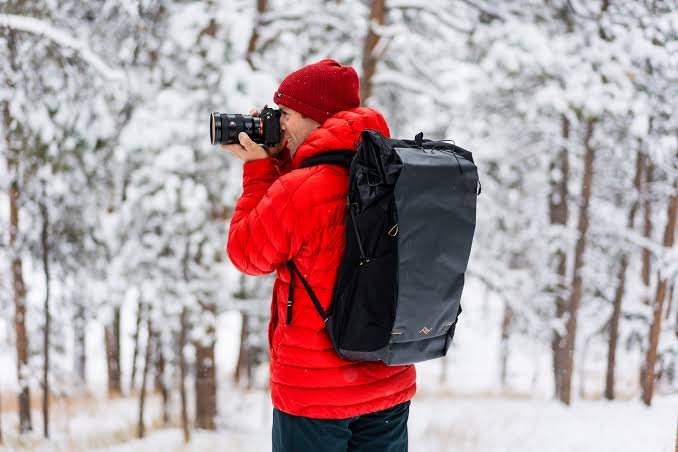

Peak Design is a well-known product company that creates camera gear, travel bags, everyday backpacks, mobile accessories, tripods, and carrying solutions for photographers, travelers, commuters, and outdoor enthusiasts.
What makes different is its focus on solving everyday carrying problems. Instead of simply creating another camera bag or backpack, the company designs products around the way people actually carry, organize, access, and protect their equipment.
The brand began with a camera-carrying problem and gradually developed into a much larger ecosystem. Today, products cover photography, travel, everyday carry, mobile accessories, and outdoor use.
Whether you are a professional photographer carrying multiple lenses, a traveler looking for an organized backpack, a commuter carrying a laptop, or someone who wants a compact camera-carrying system, has products designed for different use cases.
This guide covers what is, its history, popular products, camera bags, travel backpacks, Capture, tripods, straps, everyday gear, advantages and limitations, buying tips, maintenance, warranty, and frequently asked questions.
What Is Peak Design?
is a product company known for designing equipment and carrying systems for photography, travel, everyday life, mobile use, and outdoor activities.
The company’s roots are strongly connected to photography. Its early products were created to make carrying a camera more convenient, especially when traveling or moving between locations.
Over time, Peak Design expanded its product range beyond camera accessories. Its collections now include:
- Camera gear
- Camera bags
- Travel backpacks
- Everyday backpacks
- Camera clips
- Camera straps
- Tripods
- Packing accessories
- Mobile accessories
- Outdoor products
- Everyday carry products
The company’s product philosophy focuses heavily on functionality, organization, accessibility, and versatility.
This means a Peak Design backpack, for example, may be designed to carry camera equipment while also providing space for a laptop, clothing, charger, notebook, or other everyday items.
What Is Peak Design Known For?
Peak Design is particularly recognized for its camera-carrying and organizational products.
Some of its most recognizable product categories include:
- Everyday Backpack
- Travel Backpack
- Capture
- Travel Tripod
- Camera Straps
- Everyday Sling
- Camera plates and accessories
- Travel packing products
- Mobile accessories
One of the company’s major strengths is that many of these products can work together.
For example, a travel photographer could use a Peak Design backpack for equipment storage, Capture for quick camera access, a camera strap for additional carrying flexibility, and a Travel Tripod for stable photography.
This creates an ecosystem rather than a collection of completely unrelated products.
The History of Peak Design
’s history started with a simple photography problem.
According to the company’s official history, founder Peter Dering returned from a 2010 trip around the world frustrated with the experience of carrying a large camera.
Instead of accepting the problem, he began working on a different camera-carrying solution.
That idea eventually became a Kickstarter project and helped establish the foundation of .
The company later expanded through additional product launches and crowdfunding campaigns. Products such as Capture, Slide, Clutch, the Everyday line, Travel products, Mobile products, and tripods helped Peak Design grow beyond its original camera-carrying concept.
The company’s history is important because it explains why many products are built around practical problems.
The central idea is simple:
Identify a carrying problem, then create a more functional way to solve it.
Peak Design Product Categories
Peak Design offers a wide range of products, so understanding its major categories can make choosing the right gear much easier.
Peak Design Camera Bags
Camera bags remain one of the most important parts of the product ecosystem.
A camera bag needs to do more than store equipment. Photographers usually need:
- Protection
- Organization
- Comfortable carrying
- Fast access
- Space for multiple lenses
- Space for accessories
- Separation between camera gear and personal items
Peak Design camera-oriented bags are designed around these requirements.
Depending on the model, a bag may provide space for a camera body, lenses, laptop, tablet, charger, tripod, and everyday belongings.
Before choosing a camera bag, always consider the size of your camera and lenses rather than selecting a bag based only on its appearance or advertised capacity.
Peak Design Everyday Backpack
The Everyday Backpack is designed to combine photography with normal daily life.
Instead of carrying a dedicated camera bag everywhere, users can use an everyday backpack for several purposes.
For example, one person may carry:
- Camera
- Lens
- Laptop
- Notebook
- Charger
- Headphones
- Water bottle
- Personal items
This makes the Everyday Backpack relevant to photographers, commuters, students, professionals, and people who want one versatile bag.
The right size depends on how much equipment you normally carry.
A smaller setup may work well with a compact bag, while photographers carrying multiple lenses and additional equipment may need more internal space.
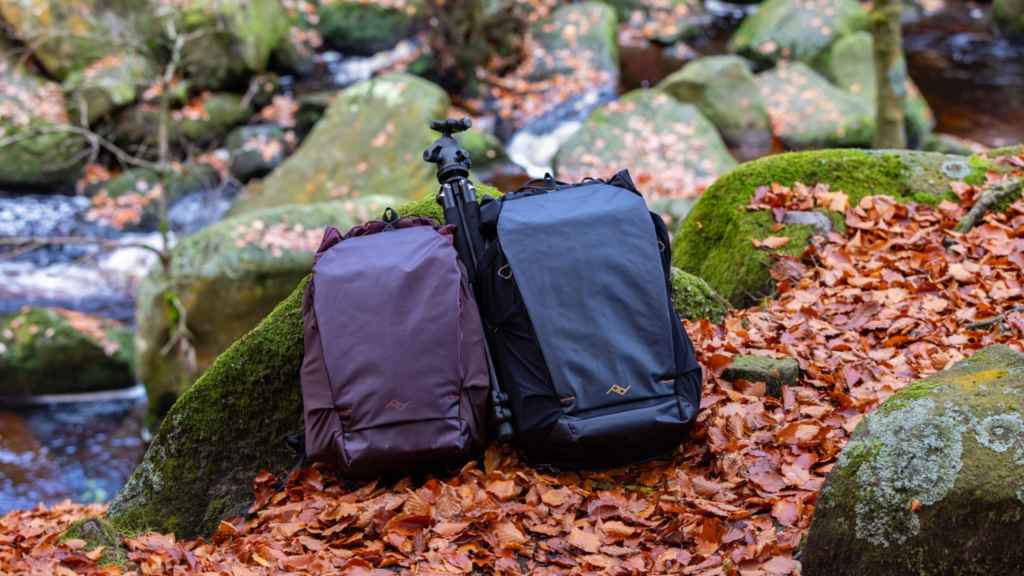
Peak Design Travel Backpack
The Travel Backpack is designed specifically for organized travel.
The current Travel Backpack range includes different capacities, including 30L and 45L versions referenced in the original material.
A travel backpack can be useful for carrying:
- Clothing
- Camera equipment
- Laptop
- Tablet
- Chargers
- Documents
- Toiletries
- Personal accessories
For photographers, the ability to combine camera gear and personal belongings in one travel setup can be especially useful.
However, bigger capacity does not automatically mean a better travel bag.
Before choosing a Travel Backpack, consider:
- Trip duration
- Equipment weight
- Clothing requirements
- Laptop size
- Airline restrictions
- Carrying comfort
- Packing style
Peak Design Capture
Peak Design Capture is a camera clip designed to provide quick access while keeping a camera more stable than a freely hanging camera strap.
It can be attached to suitable carrying locations, such as a backpack strap or compatible setup.
Capture is particularly relevant to photographers who spend time:
- Hiking
- Traveling
- Biking
- Walking outdoors
- Photographing events
- Moving between shooting locations
The main idea is accessibility.
Instead of putting a camera deep inside a backpack or allowing it to swing from a traditional strap, Capture provides another way to keep the camera ready.
Because camera equipment can be expensive, users should follow the manufacturer’s installation and compatibility instructions carefully.
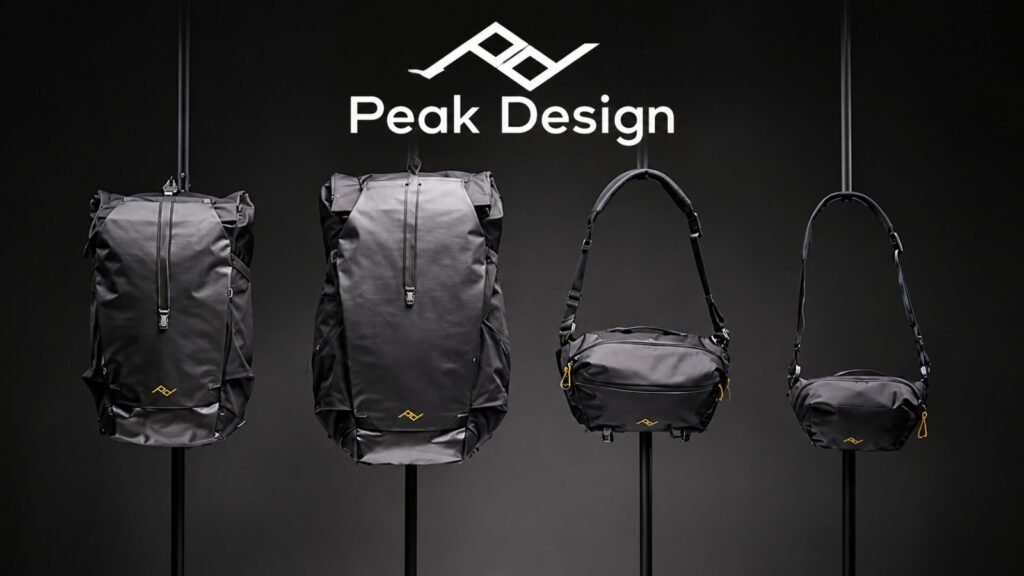
Peak Design Camera Straps
Camera straps provide another way to carry a camera while keeping it accessible.
’s camera gear collection includes strap and wrist-carry options such as Form and Cuff.
A camera strap can be useful for photographers who frequently move around while shooting.
When selecting a strap, consider:
- Camera weight
- Lens weight
- Carrying position
- Shooting style
- Comfort
- Frequency of camera access
A lightweight camera setup may require a different carrying solution from a professional camera with a large lens.
Peak Design Travel Tripod
A tripod is useful whenever camera stability is more important than handheld mobility.
offers the Travel Tripod as part of its camera gear range, along with newer tripod products.
A travel tripod can be useful for:
- Landscape photography
- Night photography
- Long exposures
- Travel photography
- Product photography
- Self-portraits
- Video recording
The major consideration is the balance between stability, weight, size, and portability.
A tripod that is easy to carry can be particularly useful for photographers who travel frequently.
Peak Design for Photographers
Photography is at the center of Peak Design’s history.
A photographer may need to carry much more than a camera.
A typical photography setup can include:
- Camera body
- Multiple lenses
- Memory cards
- Batteries
- Battery charger
- Laptop
- Tablet
- Tripod
- Camera strap
- Cleaning accessories
- Cables
- Personal items
A standard backpack may not provide enough organization for this type of equipment.
A dedicated photography-oriented bag can separate different items and make important equipment easier to access.
Peak Design’s ecosystem allows photographers to create different combinations depending on their shooting style.
A travel photographer, for example, may use a Travel Backpack, Capture clip, camera strap, and Travel Tripod.
A commuter photographer may prefer an Everyday Backpack with a smaller camera setup.
Peak Design for Travel
Travel is one of the major areas where Peak Design products can be useful.
Travelers often have to balance organization, capacity, portability, and comfort.
A single trip may require:
- Clothes
- Camera equipment
- Laptop
- Phone
- Chargers
- Toiletries
- Documents
- Accessories
A well-organized travel backpack can help separate these items.
Peak Design’s travel ecosystem includes backpacks, duffels, packing accessories, crossbody products, and other organizational gear.
For short trips, a backpack may be enough for clothing, electronics, and camera equipment.
For longer trips, travelers may need additional luggage depending on their personal packing style.
Peak Design for Everyday Carry
Peak Design is not only for photographers.
The Everyday collection is designed for people who want practical carrying solutions for work, commuting, school, travel, and daily activities.
An everyday setup might contain:
- Laptop
- Tablet
- Smartphone
- Headphones
- Charger
- Notebook
- Camera
- Water bottle
- Personal accessories
The benefit of an everyday bag is versatility.
You may use it as a work backpack during the week and as a photography or travel bag on the weekend.
This flexibility is one reason Peak Design products appeal to people outside the professional photography market.
Key Features of Peak Design Products
1. Modular Design
Modularity is an important part of the Peak Design product ecosystem.
A modular system allows users to adjust their carrying setup according to their needs.
For example, a photographer may carry three lenses during a professional assignment but only one lens during a casual trip.
The ability to change the setup can make one product useful in different situations.
2. Organization
Organization is essential when carrying expensive or frequently used equipment.
Instead of putting everything into one large compartment, organized storage can separate:
- Camera bodies
- Lenses
- Batteries
- Memory cards
- Chargers
- Cables
- Personal belongings
Better organization can also reduce the time needed to find equipment.
3. Quick Camera Access
Photographers often need to react quickly.
A wildlife photographer may need to access a camera within seconds. A travel photographer may encounter an unexpected scene while walking.
This is where products such as Capture can be useful.
The goal is to keep the camera accessible without making it difficult to move around.
4. Versatility
One of Peak Design’s major themes is versatility.
A single backpack may be used for:
- Photography
- Work
- Commuting
- Travel
- School
- Everyday activities
This can be useful for people who prefer not to own a separate bag for every activity.
5. Weather Protection
Weather resistance can be important for photographers and travelers.
Rain, dust, and changing outdoor conditions can expose bags and equipment to additional risks.
However, weather protection varies by product.
Never assume that every Peak Design bag has the same level of weather resistance. Always check the specifications of the exact model.
Peak Design Product Comparison
| Product | Main Purpose | Best Suited For | Important Consideration |
| Everyday Backpack | Daily carry + photography | Commuters and photographers | Equipment capacity |
| Travel Backpack | Organized travel | Travelers | Size and packed weight |
| Capture | Camera access | Outdoor photographers | Compatibility and installation |
| Travel Tripod | Stable photography | Travel photographers | Weight and portability |
| Camera Strap | Camera carrying | Photographers | Comfort and camera weight |
| Everyday Sling | Compact carrying | Minimal setups | Limited capacity |
| Packing Accessories | Travel organization | Travelers | Packing requirements |
This comparison is useful because the right Peak Design product depends on what you actually need to carry.
Peak Design for Professional Photographers
Professional photographers may work at:
- Weddings
- Events
- Commercial shoots
- Outdoor locations
- Travel assignments
- Portrait sessions
- Product shoots
Their equipment may include several camera bodies, lenses, batteries, tripods, and accessories.
A professional setup could include:
- Camera backpack
- Camera straps
- Capture clip
- Camera plates
- Tripod
- Lens accessories
- Packing accessories
However, professional photographers should pay particular attention to equipment dimensions.
A backpack that works for a compact mirrorless camera may not be appropriate for multiple camera bodies and large telephoto lenses.
Always compare your equipment dimensions with the manufacturer’s specifications.
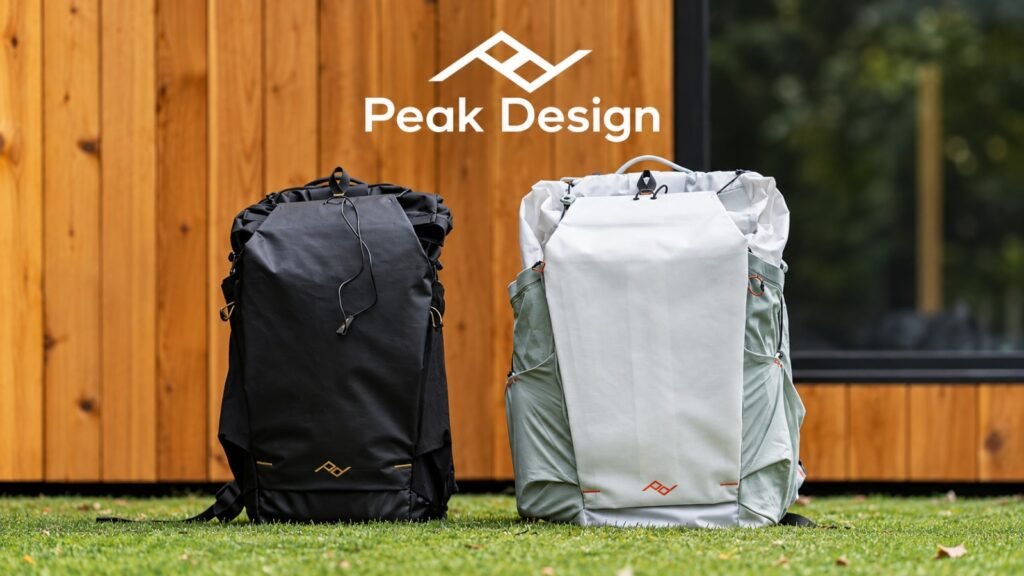
Peak Design for Mirrorless Cameras
Mirrorless cameras are popular with travel and everyday photographers because many systems offer powerful imaging capabilities in relatively compact bodies.
A compact mirrorless setup may work well with:
- Camera sling
- Everyday backpack
- Capture
- Camera strap
- Travel Tripod
Before buying, check:
- Camera body dimensions
- Lens size
- Number of lenses
- Accessories
- Laptop requirements
- Tripod requirements
Compatibility should always be confirmed before purchasing camera accessories.
Peak Design for DSLR Cameras
DSLR systems can require more space, especially when paired with larger lenses.
If you use a DSLR, pay close attention to:
- Internal bag dimensions
- Camera body size
- Lens length
- Number of lenses
- Accessory space
- Overall weight
Do not judge compatibility only from a product photograph.
Measure your equipment and compare those measurements with the manufacturer’s specifications.
Peak Design for Outdoor Photography
Outdoor photography creates different requirements from studio photography.
A photographer may need to deal with:
- Rain
- Dust
- Uneven terrain
- Movement
- Long walking distances
- Rapid camera access
A camera clip such as Capture can provide a convenient carrying option for certain outdoor activities.
However, outdoor users should consider the environment carefully.
Hiking in normal weather and working in extreme environmental conditions are not the same use case.
Choose the product according to the actual conditions in which it will be used.
Is Peak Design Worth It?
Whether Peak Design is worth the price depends on the individual user.
A person who only needs a basic backpack may not need specialized camera organization or modular carrying features.
A photographer who carries expensive equipment every day may place much more value on:
- Organization
- Accessibility
- Comfort
- Equipment protection
- Modularity
- Specialized camera-carrying options
Before purchasing, compare:
- Price
- Capacity
- Weight
- Materials
- Features
- Comfort
- Compatibility
- Warranty
- Intended use
The important question is not simply whether Peak Design is expensive or affordable.
The better question is:
Do the product’s features solve problems that matter to you?
Peak Design Pros and Cons
Pros
- Photography-focused product ecosystem
- Strong organization features
- Multiple travel options
- Modular carrying solutions
- Everyday and professional use cases
- Camera access options
- Wide range of accessories
- Products designed around different carrying needs
Cons
- Some products cost more than basic alternatives
- Fully loaded bags can become heavy
- Compatibility must be checked carefully
- Modular products may require some learning
- Specialized features may be unnecessary for casual users
- Personal preference plays a major role in bag selection
Peak Design Alternatives
Peak Design is not the only company making camera bags, travel backpacks, and photography accessories.
A buyer may consider alternatives when they want:
- A lower price
- A different bag design
- More camera-specific protection
- More storage capacity
- Lower weight
- A traditional camera-bag layout
- A different carrying style
The right comparison should focus on the actual requirements of the user.
For example, a travel photographer may prioritize portability and organization, while a professional studio photographer may prioritize equipment capacity.
Instead of asking which brand is universally better, compare the features that matter for your specific workflow.
Who Should Consider Peak Design?
Photographers
Photographers can use camera bags, straps, clips, and tripods to create a flexible carrying setup.
Travel Photographers
Travel photographers can combine camera storage with travel organization.
Commuters
Everyday backpacks can carry laptops, accessories, personal items, and compact camera systems.
Content Creators
Content creators may benefit from organized storage for cameras, phones, laptops, microphones, tripods, and accessories.
Outdoor Enthusiasts
Outdoor users may appreciate quick-access carrying systems when moving around with camera equipment.
Who May Not Need Peak Design?
Not everyone needs specialized photography gear.
A person who rarely carries a camera may be perfectly comfortable with a standard backpack.
Similarly, someone who only travels occasionally may not need a specialized travel organization system.
Budget is also important.
If a simple backpack already solves your problem, paying more for specialized features may not provide enough additional value for your particular use case.
How to Choose the Right Peak Design Product
Choosing the right Peak Design product starts with understanding your actual needs.
For Everyday Use
Choose an everyday backpack, sling, or tote if you mainly carry a laptop, personal items, and small accessories.
For Photography
Look at camera bags, camera straps, Capture, and other camera gear if photography is your primary activity.
For Travel
Consider Travel Backpack models, travel bags, and packing accessories if you frequently travel.
For Outdoor Photography
Consider a camera clip, suitable backpack, strap, and tripod based on your outdoor activities.
For Minimal Carrying
A compact sling may be more practical than a large backpack if you carry only a camera and a few accessories.
10 Things to Check Before Buying Peak Design Gear
Before buying any Peak Design product, ask yourself:
- What equipment do I need to carry?
- How large is my camera?
- How many lenses do I have?
- Do I need a laptop compartment?
- How often do I travel?
- Do I participate in outdoor activities?
- Do I need a tripod?
- How much weight can I comfortably carry?
- What is my budget?
- Which features will I actually use?
These questions can help prevent you from buying a product that is too large, too small, too heavy, or more specialized than necessary.
How to Maintain Peak Design Products
Proper maintenance can help extend the useful life of bags and accessories.
General care includes:
- Removing dust regularly
- Cleaning dirt after outdoor activities
- Keeping zippers clean
- Checking straps and attachment points
- Avoiding unnecessary overloading
- Storing gear in a dry environment
- Following the manufacturer’s cleaning instructions
Avoid using strong chemicals or aggressive cleaning methods unless they are specifically recommended for the product.
Different materials may require different care methods, so always check the instructions for the specific item.
Peak Design Warranty and Support
Warranty and customer support can be important when purchasing photography and travel gear.
The original article notes that Peak Design’s official support information states that its products come with a lifetime guarantee.
However, warranty coverage can depend on the product, situation, and applicable terms.
For that reason, buyers should review the current official warranty information before making a purchase.
Peak Design also provides support resources such as product information, manuals, FAQs, and other assistance.
Peak Design and Sustainability
Sustainability is another part of Peak Design’s stated company mission.
The company discusses topics including materials, manufacturing, climate, responsibility, equity, and environmental impact.
When researching sustainability, it is important to distinguish between a company’s stated goals and independently verified environmental outcomes.
Consumers who consider environmental responsibility an important purchasing factor should review the company’s latest sustainability information and available supporting evidence.
Peak Design vs Traditional Camera Bags
Traditional camera bags can be excellent for photographers who want a highly specialized storage system.
Peak Design often takes a more hybrid approach.
For example, an everyday backpack may be designed to carry:
- Camera equipment
- Laptop
- Charger
- Personal belongings
- Clothing
- Everyday accessories
This can be useful for photographers who also commute or travel.
However, a dedicated professional camera case may make more sense for someone transporting a large amount of specialized equipment.
The right option depends on the photographer’s workflow.
How Much Does Peak Design Cost?
Peak Design products vary considerably in price.
Camera bags, backpacks, tripods, camera clips, straps, packing accessories, and mobile products all have different prices.
Because product prices can change, the current official product page should be checked before purchasing.
Rather than focusing only on the price, consider whether the product provides the features and capacity you actually need.
A more expensive product may offer useful features for one photographer but unnecessary features for another.
Frequently Asked Questions About Peak Design
What is Peak Design?
Peak Design is a product company known for camera gear, travel bags, everyday carry products, mobile accessories, tripods, and outdoor carrying solutions.
What is Peak Design best known for?
The brand is particularly known for camera bags, Capture camera clips, camera straps, travel backpacks, tripods, and everyday carry products.
Is Peak Design good for travel?
Peak Design has a dedicated travel product range that includes backpacks, travel bags, packing products, and organizational accessories.
Is Peak Design good for photographers?
Peak Design offers a wide range of photography products, including camera bags, straps, clips, tripods, plates, and accessories.
What is Peak Design Capture?
Capture is a camera-carrying clip designed for quick access and stable carrying. It can be useful for travel and outdoor photography.
Does Peak Design make camera bags?
Yes. Peak Design offers several camera-oriented bags and everyday products that can accommodate camera equipment.
Does Peak Design make tripods?
Yes. The company’s camera gear range includes Travel Tripod and Pro Tripod products.
Is Peak Design expensive?
Prices vary depending on the product. Specialized camera and travel equipment can cost more than basic alternatives, so buyers should compare current prices and features.
Does Peak Design offer a warranty?
Peak Design’s official support information states that its products come with a lifetime guarantee. Buyers should review the current warranty terms and exclusions for the exact product.
Are Peak Design bags good for laptops?
Some Peak Design bags are designed to carry laptops and other electronics. Exact laptop compatibility depends on the individual model.
Are Peak Design products waterproof?
Weather protection varies between products. Buyers should check the specifications of the exact product rather than assuming every Peak Design item is waterproof.
Can Peak Design products be used for hiking?
Some products, including Capture, are designed around stable camera carrying and quick access during activities such as hiking and biking. The appropriate product depends on the environment and equipment being carried.
Is Peak Design suitable for everyday use?
Yes. The Everyday product range is designed for daily carrying and can combine work, personal items, and photography equipment.
Is Peak Design suitable for professional photographers?
Peak Design offers products that can be useful for professional photographers, but professionals should compare capacity, equipment dimensions, weight, and workflow requirements before purchasing.
Final Thoughts on Peak Design
Peak Design has grown from a camera-carrying solution into a broad product ecosystem covering camera gear, travel, everyday carry, mobile accessories, and outdoor equipment.
Its history began with a simple problem: how to carry a camera more effectively while traveling. That idea eventually developed into products such as camera clips, straps, camera bags, backpacks, tripods, and travel accessories.
For photographers, provides several ways to organize and carry camera equipment.
For travelers, its backpacks and packing products can help create a more structured travel setup.
For commuters and everyday users, products such as Everyday Backpacks and slings can combine personal belongings, electronics, and photography equipment.
However, there is no single product that is perfect for every user.
The right Peak Design product depends on your equipment, lifestyle, travel habits, budget, carrying preferences, and the features you actually need.
Before purchasing, compare capacity, dimensions, weight, compatibility, organization, comfort, weather protection, price, and warranty information for the exact product.
The best approach is to choose gear based on your real requirements rather than simply choosing the largest or most feature-rich product.
With the right combination of products, can provide a flexible carrying system for photography, travel, work, and everyday life.