
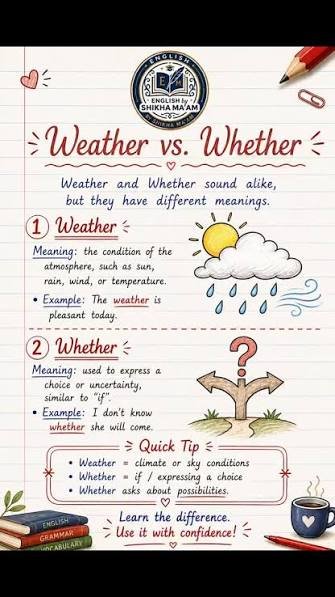

English has many words that look or sound similar but have completely different meanings. “Whether,” “wether,” and “weather” are three words that are often confused because of their similar spelling and pronunciation.
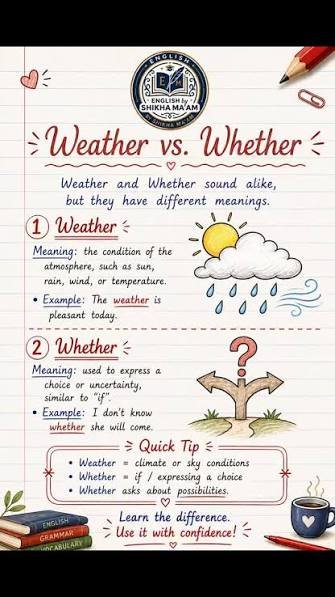
Although these words may sound alike in some accents, they have completely different meanings and grammatical uses. Whether is mainly used to introduce alternatives, choices, possibilities, or uncertainty. Wether is a specific agricultural term for a castrated male sheep. Weather refers to atmospheric conditions such as rain, wind, temperature, clouds, and sunshine.
Understanding the difference between whether or wether can help you avoid common spelling mistakes and use the correct word in both everyday and formal English.
Quick Answer: Whether or Wether?
The simplest way to remember the difference is:
- Whether = a word used to express alternatives, possibilities, choices, or uncertainty.
- Wether = a castrated male sheep.
- Weather = atmospheric conditions such as rain, wind, temperature, and sunshine.
Examples
- Whether: “I don’t know whether she will come.”
- Wether: “The farmer raised a healthy wether.”
- Weather: “The weather is warm today.”
The correct word depends on the meaning and context of the sentence.
What Does “Whether” Mean?
Whether is a common English wordWhether or Weather used to introduce alternatives, possibilities, choices, or uncertainty. It is especially common when someone is unsure about something or needs to consider two or more possibilities.
For example:
“I don’t know whether she will come.”
In this sentence, the speaker is uncertain about whether she will come.
Another common construction is whether…or:
“I can’t decide whether to stay or leave.”

Here, “whether” introduces the firstWhether or Weather possibility and “or” introduces the alternative.
The word whether is frequently used in everyday conversationWhether or Weather, business communication, academic writing, and formal English.
Whether Definition
A simple definition is:
Whether = a word used to express a choice, alternative, possibility, or uncertainty.
Examples include:
- “I wonder whether she knows.”
- “Tell me whether you agree.”
- “We need to decide whether to continue.”
- “I don’t know whether it is true.”
- “She asked whether I needed help.”
In each example, whether introduces Whether or Weathera question, possibility, or choice.
How to Use “Whether” in a Sentence
There are several common sentence structures that use whether.
1. Whether + Clause
A common structure is:
whether + subject + verb
Example:
“I don’t know whether JohnWhether or Weather is coming.”
Here, “whether John is coming” expresses uncertainty.
More examples:
- “She asked whether I needed help.”
- “We don’t know whether the store is open.”
- “He wondered whether they had arrived.”
- “I am not sure whether thisWhether or Weather answer is correct.”
2. Whether…Or
The structure whether…or is commonly used when presenting alternatives.
Examples:
- “I don’t know whether to go or stay.”
- “We must decide whether to buy or rent.”
- “She couldn’t decide whether to call or email.”
- “They discussed whether toWhether or Weather accept or reject the proposal.”
This structure makes it clear that two or more possibilities are being considered.
3. Whether or Not
Another common expression is whether or not.
Examples:
- “I will go whether or not you come.”
- “She will finish the project whether or not she receives help.”
- “We need to determine whether or not the Whether or Weatherinformation is accurate.”
In these examples, the outcome does not depend on which of the two possibilities occurs.
What Does “Wether” Mean?
Unlike whether, the word wether has nothing to do with choices or uncertainty.
A wether is a castrated male sheep. The term is mainly used in agriculture, sheep farming, livestock management, and animal-related contexts.
For example:
“The farmer bought a healthy wether.”
The word may seem unusual to peopleWhether or Weather who are not familiar with livestock terminology, but wether is a real English word, not simply a spelling mistake.
Wether Definition
A simple definition is:
Wether = a male sheep that has been castrated.
Examples:
- “The farmer selected a healthy wether.”
- “The flock included several ewes and wethers.”
- “The young wether was moved to another enclosure.”
- “The farmer separated the wethersWhether or Weather from the breeding rams.”
Because wether is a specialized Whether or Weatheragricultural term, it is much less common in everyday English than whether or weather.
Whether vs Wether: What Is the Difference?
The easiest way to understand the difference is to focus on the meaning and context of each word.
| Word | Meaning | Part of Speech | Common Context |
| Whether | Expresses alternatives, possibilities, or uncertainty | Conjunction | Grammar and everyday English |
| Wether | A castrated male sheep | Noun | Farming and livestock |
| Weather | Atmospheric conditions | Noun | Nature and daily life |
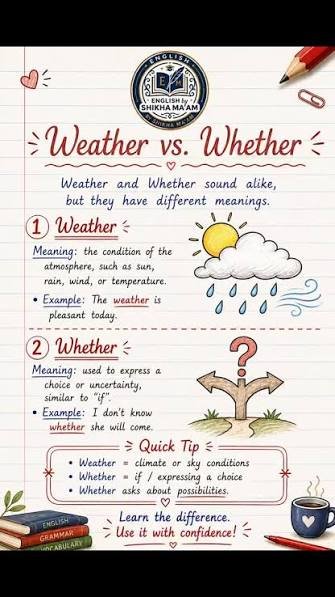
Whether
“I don’t know whether she will come.”
This sentence is about uncertainty.
Wether
“The farmer owns a wether.”
This sentence is Whether or Weatherabout a sheep.
Weather
“The weather is cold today.”
This sentence is about atmospheric Whether or Weatherconditions.
These examples show why context is important when choosing the correct word.
Whether vs Weather: What Is the Difference?
Whether and weather are often confused becauseWhether or Weather they can sound very similar in some varieties of English.
However, their meanings are completely different.
Whether
Whether relates to alternatives, possibilitiesWhether or Weather, choices, or uncertainty.
Example:
“I don’t know whether he is available.”
Weather
Weather refers to atmospheric conditions such as rain, wind, temperature, clouds, and sunshine.
Example:
“The weather is rainy today.”
A simple way to remember them is:
Whether = choice or possibility
Weather = atmospheric conditions
Whether, Wether, and Weather Compared
These three words are easy to confuse, but each has a distinct meaning.
Whether
Use whether when talking about:
- choices
- alternatives
- possibilities
- uncertainty
- indirect questions
Example:
“I don’t know whether to accept the offer.”
Wether
Use wether when talking about:
- sheep
- livestock
- farming
- animal terminology
- a castrated male sheep
Example:
“The farmer separated the wether from the breeding animals.”
Weather
Use weather when talking about:
- rain
- wind
- sunshine
- temperature
- clouds
- storms
- atmospheric conditions
Example:
“The weather forecast predicts rain.”
Is “Wether” a Real Word?
Yes. Wether is a real English word.
It is not simply a misspelling of whether or weather.
A wether is a castrated male sheep, and the word is primarily used in agricultural and livestock contexts.
For example:
“The farmer raised a wether.”
This sentence is correct if the writer is referring to a castrated male sheep.
Because the word is relatively uncommon in everyday conversation, people who are unfamiliar with sheep terminology may mistakenly think that “wether” is an error.
Is “Whether” a Real Word?
Yes. Whether is a standard and very common English word.
It is used to introduce alternatives, possibilities, choices, or uncertainty.
Examples:
- “I don’t know whether he is ready.”
- “She asked whether I wanted coffee.”
- “We need to decide whether to continue.”
- “He wasn’t sure whether the information was correct.”
Learning how to use whether correctly is especially important for English learners because it frequently appears in both spoken and written English.
Whether Sentence Examples
The best way to understand whether is by looking at examples.
Example 1
“I don’t know whether she is at home.”
The speaker is uncertain about her location.
Example 2
“He asked whether I needed assistance.”
Here, whether introduces an indirect question.
Example 3
“We need to decide whether to continue.”
The sentence presents a decision.
Example 4
“She couldn’t decide whether to buy the red dress or the blue one.”
Two alternatives are presented.
Example 5
“I am unsure whether this information is accurate.”
The speaker expresses uncertainty.
Example 6
“Tell me whether you agree.”
Here, whether introduces an indirect question.
Example 7
“They discussed whether the plan would work.”
The word introduces a possibility being considered.
Example 8
“We will continue whether or not they approve.”
This means the action will continue regardless of the outcome.
Wether Sentence Examples
Because wether is a livestock term, its examples usually involve sheep.
Example 1
“The farmer purchased a healthy wether.”
Example 2
“The wether was kept with the rest of the flock.”
Example 3
“The farmer separated the wethers from the breeding rams.”
Example 4
“Several wethers were raised on the farm.”
Example 5
“The agricultural guide explains how wethers are managed.”
These examples demonstrate how wether is used in an agricultural context.
Weather Sentence Examples
The word weather has a completely different meaning.
Example 1
“The weather is beautiful today.”
Example 2
“The weather forecast says it will rain.”
Example 3
“Cold weather can make travel difficult.”
Example 4
“The farmers are watching the weather carefully.”
Example 5
“The storm caused severe weather in the region.”
Use weather when discussing atmospheric conditions.
Why Are Whether, Wether, and Weather Confused?
There are several reasons these words are commonly confused.
Similar Pronunciation
In many English accents, whether and weather have very similar pronunciations. Wether can also sound similar.
Because pronunciation may not always distinguish these words clearly, context becomes important.
For example:
“I don’t know whether he will come.”
The meaning is clear from the surrounding sentence.
Similarly:
“The farmer has a wether.”
The farming context tells us that the word refers to a sheep.
Similar Spelling
The words contain similar combinations of letters:
- whether
- wether
- weather
This makes them easy to confuse when writing quickly.
Different Meanings
Despite their similar spelling and sound, their meanings are unrelated:
- Whether → choice or uncertainty
- Wether → sheep
- Weather → atmospheric conditions
Understanding the meaning of each word is the best way to choose the correct spelling.
How to Remember Whether
A simple memory technique can make whether easier to remember.
Think:
Whether = Which option?
For example:
“Whether I should go or stay?”
There are two possibilities: go or stay.
The common structure whether…or can also help:
- whether to stay or leave
- whether to buy or sell
- whether to accept or reject
- whether to continue or stop
When you are talking about alternatives or uncertainty, whether may be the correct word.
How to Remember Wether
Think of wether as an animal-related word.
A wether is a castrated male sheep.
If the sentence is about:
- sheep
- farming
- livestock
- a flock
- animal management
then wether may be the correct word.
For example:
“The farmer has three wethers.”
The sentence is clearly about sheep.
How to Remember Weather
The easiest association is:
Weather = atmospheric conditions
Think about:
- rain
- clouds
- wind
- sunshine
- snow
- temperature
- storms
For example:
“The weather is rainy.”
Whenever you are discussing atmospheric conditions, use weather.
Common Mistakes With Whether and Wether
English learners often choose the wrong word because they rely on sound instead of meaning.
Mistake 1: Using Wether for Whether
Incorrect:
“I don’t know wether he will come.”
Correct:
“I don’t know whether he will come.”
The sentence expresses uncertainty, so whether is correct.
Mistake 2: Using Weather for Whether
Incorrect:
“I don’t know weather she agrees.”
Correct:
“I don’t know whether she agrees.”
The sentence is about uncertainty, not atmospheric conditions.
Mistake 3: Using Whether for Weather
Incorrect:
“The whether is cold today.”
Correct:
“The weather is cold today.”
The sentence refers to atmospheric conditions.
Mistake 4: Assuming Wether Is a Typo
Sometimes people see wether and assume it is incorrect.
However:
“The farmer bought a wether.”
is correct when the sentence refers to a castrated male sheep.
Whether or If: Are They the Same?
Another common grammar question is the difference between whether and if.
In some sentences, both words can express uncertainty.
For example:
“I don’t know whether he is coming.”
and:
“I don’t know if he is coming.”
Both sentences can express uncertainty about his arrival.
However, whether is especially useful when alternatives are explicitly presented.
For example:
“I don’t know whether to stay or leave.”
The sentence clearly presents two alternatives.
The important point is that whether is strongly associated with alternatives, possibilities, and indirect questions.
Whether or Not: How Does It Work?
The phrase whether or not is used when something applies regardless of which possibility is true.
For example:
“I will attend whether or not you come.”
This means the speaker will attend in either situation.
Another example is:
“You should complete the application whether or not you think you will be accepted.”
The action is presented as independent of the outcome.
This construction is common in both formal and informal English.
Whether in Formal Writing
Whether is useful in formal writing because it allows writers to express alternatives, uncertainty, and questions precisely.
For example:
“The organization must determine whether the proposed policy meets the required standards.”
Other examples include:
- whether the evidence supports the conclusion
- whether the method is appropriate
- whether the results are reliable
- whether the proposal should be accepted
- whether the information is accurate
Using whether in these situations can make the relationship between an issue and the possible outcomes clear.
Wether in Agriculture and Livestock
The word wether has a specific place in agricultural vocabulary.
Sheep farming uses different terms to identify animals according to characteristics such as sex, age, and reproductive status. Wether refers specifically to a castrated male sheep.
The term can appear in:
- sheep farming
- livestock management
- agricultural education
- animal husbandry
- farming publications
- livestock discussions
For readers unfamiliar with farming terminology, wether may look unusual. Its specialized meaning explains why it appears less often than whether or weather.
Whether, Wether, and Weather Pronunciation
Pronunciation is one reason these words are sometimes difficult to distinguish.
In many English accents, whether and weather sound very similar. Wether can also have a similar pronunciation.
This means that context is often important.
If someone says:
“I don’t know whether he will come.”
the sentence indicates that the speaker is talking about uncertainty.
If someone says:
“The farmer has a wether.”
the agricultural context indicates that the word refers to a sheep.
If someone says:
“The weather is changing.”
the context clearly refers to atmospheric conditions.
Therefore, listening to the surrounding words can help you understand which word is intended.
Whether or Wether: Easy Comparison
Here is the easiest way to remember the three words:
WHETHER
Meaning: choice, possibility, or uncertainty.
Example:
Whether or Weather
WETHER
Meaning: a castrated male sheep.
Example:
“The farmer raised a wether.”
WEATHER
Meaning: atmospheric conditions.
Example:
“The weather is cold.”
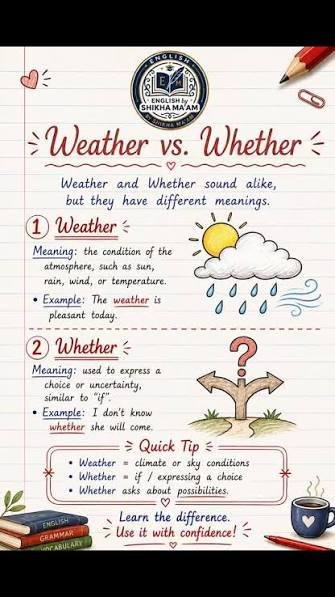
A simple formula is:
Whether = choice
Wether = sheep
Weather = sky and atmospheric conditions
AEO: Direct Answers to Common Questions
What is the difference between whether and wether?
Whether is used to express alternatives, choices, possibilities, or uncertainty. Wether is a noun meaning a castrated male sheep.
Is wether a correct English word?
Yes. Wether is a legitimate English word used primarily in livestock and sheep-farming contexts.
What does whether mean?
Whether is a word used to introduce alternatives, possibilities, choices, or uncertainty.
What does wether mean?
Wether means a castrated male sheep.
Is whether the same as weather?
No. Whether is related to alternatives and uncertainty, while weather refers to atmospheric conditions.
Is wether the same as weather?
No. Wether refers to a castrated male sheep, while weather refers to atmospheric conditions.
How can I remember the difference?
Remember:
Whether = choice
Wether = sheep
Weather = atmospheric conditions
GEO: Understanding Whether, Wether, and Weather
When people search for “whether or wether,” they may be looking for different types of information. Some may want the meaning of whether, while othersWhether or Weather may want to know whether wether is a real word.Whether or Weather Another group may actually be looking for the difference between whether and weather.
The three words belongWhether or Weather to different semanticWhether or Weather categories:
- Whether belongs mainly to English grammar andWhether or Weather expresses alternatives, possibilities, or uncertainty.
- Wether belongs to agricultural and livestock vocabulary and describes a castrated male sheep.
- Weather belongs to environmental and meteorological vocabulary and describes atmospheric conditions.
Understanding these relationships helps readers identify the correct word based on context.
For example, a search for “whether or wether meaning” is primarily a vocabularyWhether or Weather question. A search for “whether or weather difference” is generally about spellingWhether or Weather, pronunciation, and grammar. A search for “what is a wether sheep” is related to agriculturalWhether or Weather terminology.
Clear definitions, examples, comparisons, and FAQs make the topic easier to understand for both readers and answer engines.
Practical Examples: Choose the Correct Word
Consider these sentences and choose the correct word.
Sentence 1
“I don’t know ___ he will arrive.”
Correct answer:Whether or Weather whether
“I don’t know whether he will arrive.”
Sentence 2
“The farmer Whether or Weatherowns a ___.”
Correct answer: wether
“The farmer owns a wether.”
Sentence 3
“The ___ is sunny today.”
Correct answer: weather
“The weather is sunnyWhether or Weather today.”
Sentence 4
“She asked ___ I wanted tea.”
Correct answer: whether
“She asked whether I wanted tea.”
Sentence 5
“The farmer separated the ___ from the other sheep.”
Correct answer: wether
Sentence 6
“The bad ___ delayed the journey.”
Correct answer: weather
These examples show that the meaning of the sentence determines the correct spelling.
A Simple Quiz: Whether, Wether, or Weather?
Test your understanding by filling in the blanks.
- I don’t know ___ she will attend.
- The ___ forecast predicts rain.
- The farmer has a young ___.
- We must decide ___ to continue.
- The cold ___ affected the crops.
Answers
- whether
- weather
- wether
- whether
- weather
The key is to focus on the meaning of the sentence rather than pronunciation alone.
Tips for Avoiding Spelling Mistakes
Focus on Meaning
Don’t choose the word simply because it sounds right. Ask yourself what the sentence is talking about.
Is it a choice or possibility?
Use whether.
Is it a sheep?
Use wether.
Is it rain, wind, temperature, or another atmospheric condition?
Use weather.
Look for “Or”
When you see a construction such as:
“whether…or”
you can usually identify whether easily.
Examples:
- whether to stay or leave
- whether to buy or rent
- whether to accept or reject
Look for Farming Context
If the sentence discusses sheep, livestock, or farming, wether may be the correct word.
Look for Atmospheric Context
If the sentence discusses rain, wind, temperature, storms, clouds, or forecasts, use weather.
Whether or Wether in Online Searches
The phrase “whether or wether” is useful for people searching for help with a common English vocabulary and spelling confusion.
Related searches may include:
- whether or wether
- whether vs wether
- wether meaning
- whether meaning
- whether or weather
- wether vs weather
- difference between whether and wether
- difference between whether and weather
- whether examples
- wether examples
- weather examples
A useful article should cover these related concepts naturally instead of repeating the exact keyword unnecessarily.
The goal should be to answer the reader’s question clearly while maintaining natural language and good readability.
Frequently Asked Questions
What is “whether”?
Whether is a word used to express alternatives, possibilities, choices, or uncertainty.
What is “wether”?
Wether is a noun referring to a castrated male sheep.
What is “weather”?
Weather refers to atmospheric conditions such as temperature, wind, rain, clouds, and sunshine.
Are whether and wether pronounced the same?
They can sound very similar depending on the speaker’s accent. Context can help determine which word is intended.
Is wether a misspelling?
No. Wether is a real English word with a specific livestock-related meaning.
When should I use whether?
Use whether when discussing alternatives, possibilities, choices, or uncertainty.
Example:
“I don’t know whether she will come.”
When should I use wether?
Use wether when referring to a castrated male sheep.
Example:
“The farmer owns a wether.”
When should I use weather?
Use weather when referring to atmospheric conditions.
Example:
“The weath